How to Identify Vintage Clothing by Decade
Tags, stitching, zippers and union labels — the tells that date a garment in under a minute.
Fashion · ReBL Editorial · August 16, 2026 · 5 min read
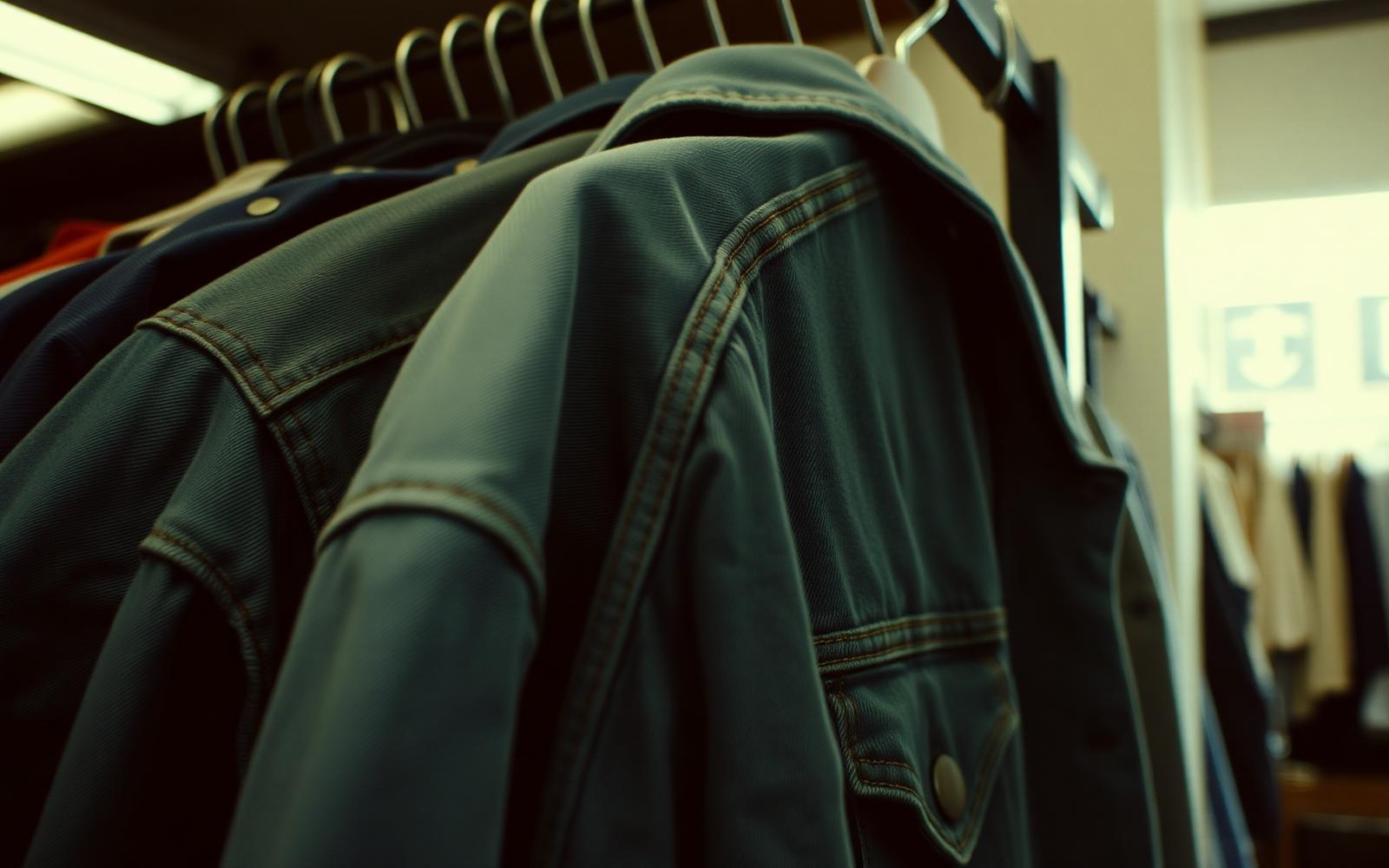
Dating a garment is a thirty-second job once you know where to look. Tag, stitch, zipper, seam. Here is the order we check every piece that comes into ReBL.
02Start with the care label
Care instruction labels became mandatory in the United States in 1971. No care tag at all usually means pre-1971 or a garment where the tag was cut. Fiber content labeling arrived in 1960. An RN number on the tag identifies the manufacturer and its issue range narrows the decade: numbers under about 13,670 were issued before 1959, and numbers above roughly 100,000 are 1998 or later.
03Look for a union label
The ILGWU union label is one of the fastest tells for American-made womenswear. The earlier all-blue lettering label runs from the 1930s to the mid-1960s. The red, white and blue version with the AFL-CIO mark generally dates from 1964 onward, and later variants continue into the 1990s. A union label at all means domestic manufacture.
Quote 01“An RN number on the tag identifies the manufacturer and its issue range narrows the decade: numbers under about 13,670 were issued before 1959, and numbers above roughly 100,000 are 1998 or later.”
04Check the stitching on tees
For t-shirts, flip the sleeve and hem. A single line of stitching — single stitch — is the classic marker of a shirt made before the mid-1990s. Double stitching became the industry standard around 1994 to 1996. Single stitch plus a soft, thin hand plus a tag brand like Screen Stars, Hanes Fifty-Fifty, Tultex or Jerzees puts you squarely in the 80s or early 90s.
05Read the copyright and tour dates
Licensed graphics almost always carry a small copyright year near the hem of the print. Tour tees list dates on the back. These are the most reliable dating evidence on any garment, but confirm against the tag and stitch — reprints exist and they will carry an old copyright with modern double stitching and a modern blank.

06Zippers date outerwear and denim
Metal zippers dominate before the 1960s. Talon is the common American name into the 60s, with the distinctive Talon 42 stamping. Nylon coil zippers spread through the 60s and 70s. YKK becomes ubiquitous from the 1970s onward, and a YKK zipper essentially rules out anything genuinely pre-60s.
Quote 02“Single stitch plus a soft, thin hand plus a tag brand like Screen Stars, Hanes Fifty-Fifty, Tultex or Jerzees puts you squarely in the 80s or early 90s.”
07Seams, selvedge and construction
Turn a garment inside out. Unfinished or pinked seams suggest older construction; overlocked and serged seams are later and industrial. On denim, a white selvedge line inside the outseam points to pre-1980s American mills or modern premium repro. Chain-stitched hems, hidden rivets and single-stitch back pockets each narrow the window further.
08Made in labels
Country of origin tells you about the supply chain era. Made in USA dominates through the 1970s. Production shifts heavily toward Korea, Taiwan and Hong Kong in the 80s, then China, Mexico and Bangladesh from the 90s. A Made in USA tag on a mass-market brand after about 2000 is rare.
Quote 03“Every piece in the ReBL catalog is dated and condition-graded using this exact process, with measurements listed so vintage sizing never surprises you.”
09Put it together
No single tell is proof. Stack three: a single-stitch hem, a 1991 copyright, and a Screen Stars tag agree with each other and give you a confident early-90s date. When two signals disagree, trust construction over graphics — a print can be faked, a hem cannot.
Every piece in the ReBL catalog is dated and condition-graded using this exact process, with measurements listed so vintage sizing never surprises you.